If people want truly green infrastructure, the only practical options are nuclear power and densification -basically turn as many cities as possible into Paris. LRTs don't need batteries because they're hooked into the grid with catenary lines, subways have 3rd rails, bikes run on human, and e-bikes use only tiny batteries.
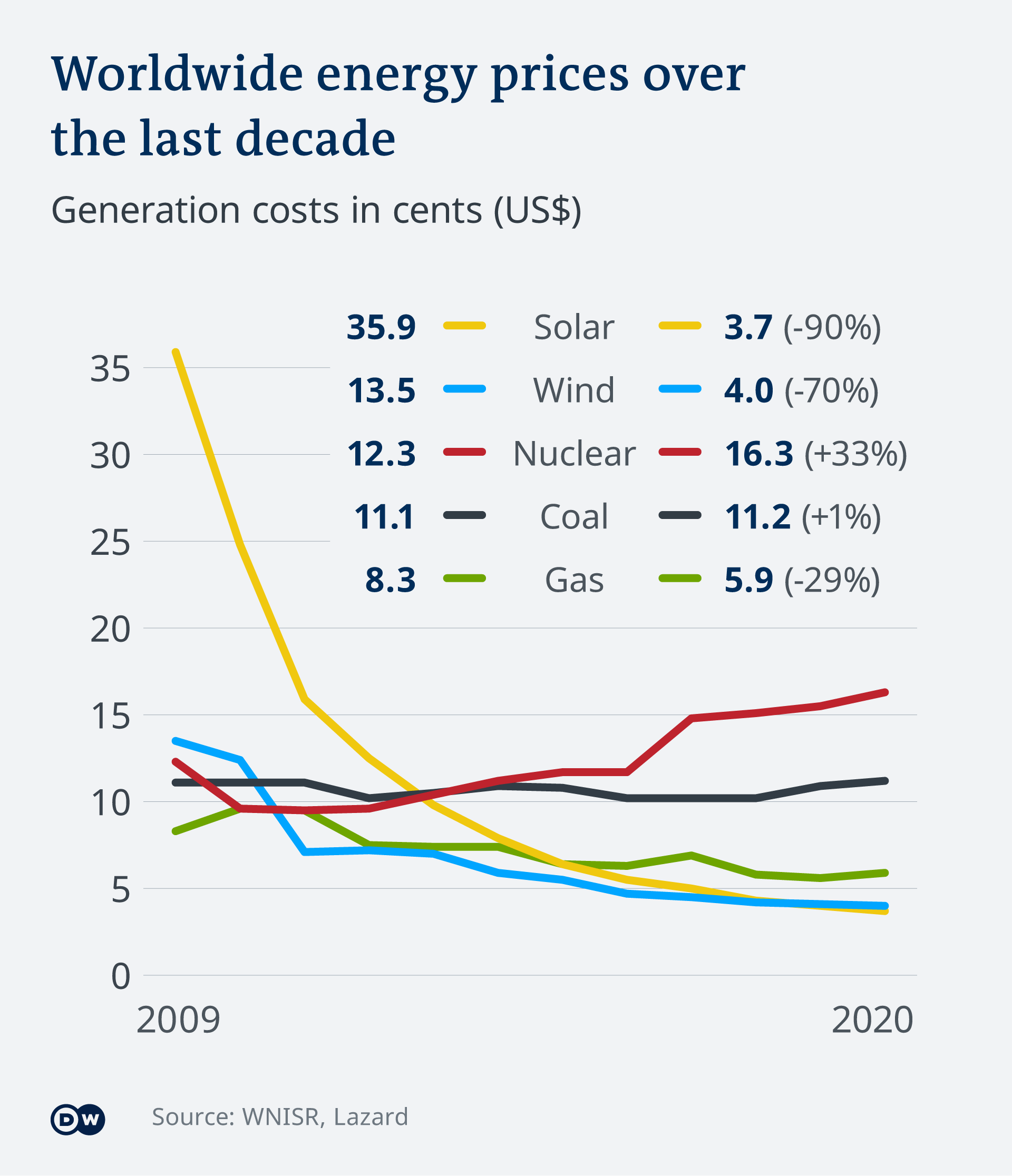
And while nuclear power isn't ideal, it's the only tech that has fully decarbonized power grids at State level.
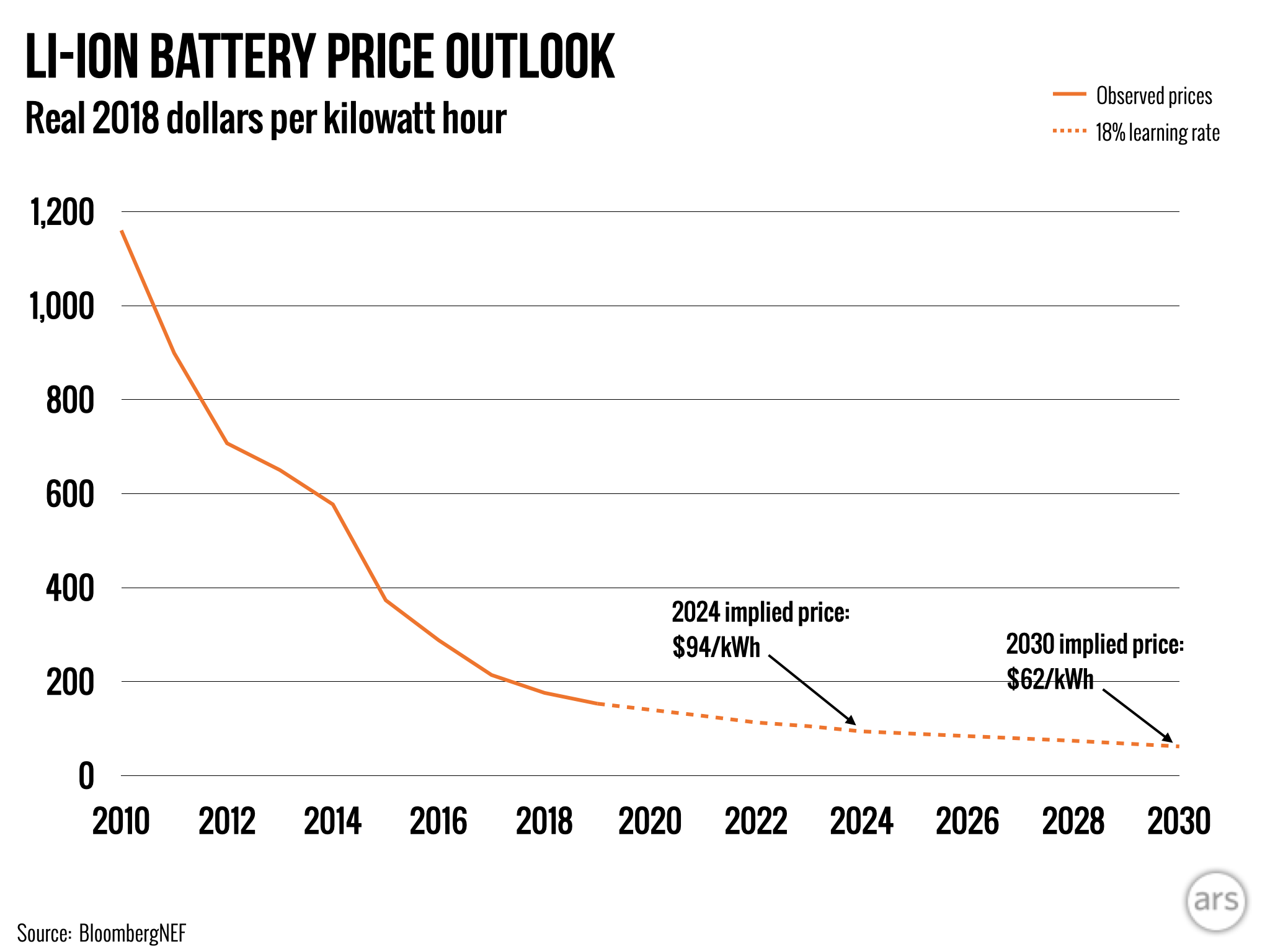
Otherwise we need battery power on an utterly insane level.
This was the common mantra ca. 15 yes ago on Slashdot that made you look extremely in-the-know, with that ineffable quality of genius that cynicism is often mistaken for.
My point is that nowhere has successfully done it. No jurisdiction that I know of has completed a changeover to zero-carbon emissions power based on their wind/solar production, while there are several that have been quietly humming along on 100% nuclear for years.
While there have been massive advancements in wind/solar, the only tech that has been successfully used to create the backbone of a zero-carbon power-grid is nuclear.
Interestingly if we have significant excess production from intermittent sources we can reduce our battery needs. Last I read the best cost/benefit ratio was something like 7x the energy production.
That said nuclear base load makes a _lot_ more sense.
I point to nuclear power simply because it's already proven to work. Overbuilt wind/solar should work in theory, but primarily nuclear-powered grids exist right now.
Where did you read that? Methane which already powers 40% of the US electrical grid can be created and then turned back in electricity in a Electricity→Gas→Electricity process with a round trip efficiency of 30–38% [0]. There is no way you'd need 7x production when you can use surpluses to make methane or hydrogen.
There's a whole spectrum of energy storage tech where the tradeoff is efficiency vs cost. At the extreme end of high cost with high efficiency you have magnetic energy storage, then slightly less-efficient but lower cost you have batteries, then in the middle you have things like synthetic methane, cracking hydrogen, and pumping water up-hill, and at the bottom for lowest-cost and lowest-efficiency you have compressed air.
Finding the right balance of overbuilding supply and storage efficiency is going to be a long process.
The goal was to have a long term hydrogen, mid/peaker battery setup with the minimum cost while providing for the entire grid.
Unfortunately I didn't take notes as to what the source was and I read this about a year ago. Google has been entirely useless as I've tried to dig it back up.
We can't turn US cities into Paris. Turning into Paris requires infrastructure, like subways and the like! But between tariffs on things like steel, gross administrative incompetence, labor union shenanigans, and environmental review laws, the US is incapable of building such infrastructure.
Someone's going to complain "but environmental review is important to protect the environment!" which is why NYC's congestion charge is going to be delayed and litigated for the next 10-20 years in environmental review while cars stuck in traffic spew pollution into the environment.
And someone's going to complain about me mentioning labor unions, too, and admittedly they're sometimes a small part of the problem (when not suing under the environmental review laws) but the Second Avenue Subway still had to give the unions a six-figure payout for using a tunnel boring machine, and every crane has to have someone employed as a full-time oiler because it's still 1910 and we're on steam power. European labor somehow manages to avoid these levels of absurdity.
Not that this is necessarily the top problem. The notoriously free-market pro-business right-wing New York Times (cough, cough) brought over the guy who was in charge of Crossrail, and he was shocked at how many people were standing around the dig site doing nothing. The MTA had no idea why most of them were there getting paid. The MTA also has a bad habit of completing Phase 1 of a project, letting all the contractors who know anything about it go on to other projects, then starting again from scratch on Phase 2 a while later, so that there's absolutely no in-house expertise.
> Also don't forget, many people don't want to live in a crowded, noisy, dirty, disease ridden city.
I dispute that cities are necessarily dirty and disease ridden, particularly the latter. There are models for cities that would work in this regard (e.g. Tokyo, Singapore).
That said, I don't necessarily have much sympathy for the notion that we shouldn't rely on electric cars -- we should just do the simpler option of completely restructuring American cities and reallocating vast numbers of people. Which would be overwhelmingly, unfathomably expensive, as well as rely on people actually wanting to move to the new cities. (Or forcing them to, I suppose.)
Speaking for myself, I like having a bit of space. My very long term goal is to have a house or cabin in some decent forest, secluded and private and peaceful. City life just isn't appealing.
edit: and I'm not saying that cities are our only option, I'm saying that cities are our only option if we want to avoid having to create and maintain an utterly staggering amount of batteries.
> We can't turn US cities into Paris. Turning into Paris requires infrastructure, like subways and the like!
Houston famously has the largest highway in the US - the Katy Freeway (I-10) is 20 lanes + 6 frontage lanes at its widest, and it is an absolute eyesore [0]. Despite the almost $3 billion spent to expand it to 26 lanes, traffic has only gotten worse because of induced demand and the fact that cars are a horrendously inefficient way of moving people since the vast majority of traffic will always be single-occupant. Once you need two lanes in either direction to "fix traffic," you will never be able to keep up with demand unless the area depopulates.
Houstonians who rely on public transit find that their mobility is severely impaired. This is because our suburban sprawl is fundamentally incompatible with the "transit must be partially/wholly sustained by fares" logic which has been employed since the systems began to fall into public ownership as private operators began folding during the post-WW2 white-flight to the suburbs.
Even if you have self-driving electric busses (no driver to pay), you cannot provide sprawling neighborhoods with large minimum lot sizes and detached single-family homes enforced by zoning restrictions "good" bus service simply because of the capital required to purchase enough vehicles to run into these low-density areas regularly. And it should be noted that sub-10 minutes is the headway you need to provide for people to routinely take transit over their car because that feels frequent enough that people don't plan around the bus [1]. More than 20 minutes, and you have lost most potential riders. But in many cities, even 15 minute headways are the exception, not the norm. My home county has a total of 5 bus lines that run once an hour and stop at 8 PM, so the only people who ride it are those without cars. The city I currently live in also has lines that run once an hour (despite having a population of ~850k vs 160k).
So at this point, you might be thinking that America is forever doomed to repeat the abject failure of 20th-century urban planning. But that's not the case: Houston wasn't built around the car, it was destroyed and remade for the car. Like other American cities, if you look at photos of downtown from the early 1900s [2][3], the roads were much smaller, and things were at a human-scale. Photos from the 80s [4], by comparison, are filled with massive roads and parking lots to an almost comical extent. Of course, downtown Houston is nowhere near that bad today [5], but there is still a ton of land producing next to no tax revenue for the city because they are only used to store cars.
My point is that our cities weren't always like this. We can fix them. Yes, it costs money, and yes, it is temporarily inconvenient, but we spent hundreds of billions, if not trillions, rebuilding our cities around the car, so we could easily fund comprehensive public transportation, road-diets, bike lanes, and highway capping (or even outright removal) projects by raising taxes on the rich and eliminating wasteful spending like that which regularly occurs in our defense industry. It means a fundamental change to the American landscape again, of course - the reason we even have large, sprawling neighborhoods that cannot be retrofitted for good public transit is a byproduct of previous federal policies (like red-lining) and zoning restrictions - but as we head towards a climate catastrophe, we have to do something, and it's cheaper to pay up now. Electric self-driving cars will not get us out of this mess; private industry cannot begin to save the environment on its own, nor is it in its best interest to do so.
> The city of Milan built a new subway line, and some of the cheaper subway stations cost €8 million. The city of New York added a single wheelchair ramp to Avenue H which cost $14 million.
This is in large part because the MTA is a state agency. The city has little real control over the MTA. Because the NY legislature is in Albany, they are entirely detached from the realities of city residents who have been hoping for change for decades. Andy Byford is a great example of this: he spearheaded the single greatest increase in subway speeds in a generation, and the SPEED team he created has continued to increase speeds across the system [6]. He is also the reason CBTC is being deployed much more widely across the system [7] (relative to its deployment when he was appointed), and anyone who has taken the 7 or L at rush hour has seen the effects of that: trains run so close together that they oftentimes have to stop and wait for the train in front of them to exit the station.
And Cuomo ran him out of town because he realized Byford was the one getting good PR, rather than the media worshipping him. It's not often that you find people who genuinely care and are able to manage a juggernaut of an agency and make meaningful improvements while warding off meddling attempts from a hostile boss, and I doubt another one will come along for awhile.
There are a lot of reasons the MTA has such high costs. It's basically death by a thousand cuts - many individual laws that, on their own, increase very little, but as a whole have ballooned things to an absurd degree. And because the state legislature doesn't take the MTA to go to work in Albany, they have no reason to try and improve it. There's also a large rural vs urban divide in the legislature, which ultimately makes fixing the cost overrun problems about as easy as making bidding on DoD contracts more competitive.
Really, the best thing that could happen is for the MTA to become a multi-state agency because it already serves NY and CT (via MNR), and NJ gets the shortest straw despite having tons of commuters who would love to not have to drive. Regional planning is next to impossible with the current situation. Combine PATH and the MTA (at minimum), ideally NJTransit as well. Imagine being able to board a train at Trenton and through-run all the way to New Haven or Montauk. This would revolutionize passenger rail in the region, and because all three states would have to agree to such a venture, it would allow side-stepping many of the cuts that plague the MTA today without having to explicitly repeal the legislation. (Not that it would eliminate graft, of course - PATH has plenty - but it would reduce a lot of it.)
But more realistically, the most likely thing would be for the MTA to return to city control. It would likely be much better since local politicians actually use the system and can be held directly to account without the rural vs urban state divide that encourages not improving the status quo, but would still suck for everyone across the Hudson.




And while nuclear power isn't ideal, it's the only tech that has fully decarbonized power grids at State level.
Otherwise we need battery power on an utterly insane level.