I can only give anecdotes, but the majority of the support I saw for leaving the EU wasn't rooted in hard economics – there were claims about doing our own free trade deals and having an extra £350 Million being spent on the NHS instead, but that was about it. A lot of support centred around how our culture & history ought to be perceived, limiting migration, and not having faith/trust in the EU and our Governments.
Again anecdotes, but the most common reprieve I hear from Leave supporters is that leaving would've been great if not for 1) the years of political deadlock 2) Johnson's deal being naff. For most of us life hasn't improved since leaving (the pandemic right after didn't help); and after the promises about the sunlit uplands if we left, I don't think anything short of a miracle would make it feel like it was worth it.
I think the only people who feel like it was worth it were those who voted Leave through a culture/prestiege lens and put the fact that we left above everything else.
>> A lot of support centred around how our culture & history ought to be perceived, limiting migration
In reality they voted to replace immigration from EU with immigration from other countries. I guess it is better for UK culture to have more Asian people instead of European.
The guy who voted Brexit because he was fine with German and Polish immigrants who came to the U.K. and worked but he didn’t want Iraqi and Syrian refugees told me everything I needed to know about democracy.
As a 24 year old this is the biggest kick in the teeth, and I had no say in the matter because I wasn't old enough to vote. Apparently the EU is in discussion with the UK to continue the Youth Mobility Scheme - I hope it happens.
It's a good opportunity to experience what most people on Earth have to deal with. Please don't take it personally Simon, it's just that your compatriots tend to be the most entitled people I've met.
Yes, but getting a visa was never the main overhead involved in moving to Europe. That's why in practice very few British people ever used that ability outside of retirees going to Spain, and why it didn't play a part in the debate. Some people liked the idea that they could in theory live in France or Germany, but moving to the US, Australia or Canada has always more popular for British workers despite being harder.
I'm one of the few Brits that actually did move to Europe, specifically to Switzerland at a time when being in the EU didn't help, so I went through the usual immigration process. The paperwork wasn't an issue. 99% of the work was language learning and social integration. Hence why Anglophone countries get the bulk of the UK emigration.
If someone said, "I've lost the right to move to America" it would be interpreted as meaning you can't go there even if you go through the usual process that is otherwise required.
If the word meant that, then I have had a "right" to every job in existence except for those that have birthright requirements and that requirement cannot be altered, plus all the benefits schemes that exist worldwide that aren't necessarily contingent on birthright.
Do you actually use the word that way? I have yet to meet anyone who has accepted such a use.
Using the word "right" in such an expansive way would be saying that I have both a right to Californian food stamps and Norwegian child benefits and a Chinese pension; as a Brit living in Germany, I assert that this is a silly use of the word "right".
You can't spell "birthright" without "right". I don't have the "right" to become US president because I was not born there. And yet, changing the USA's constitution has a "usual process that is otherwise required" — the fact that it is so does not mean I can reasonably say that I have the "right" to become a president of the USA.
The fact is, before Brexit, any Brit could freely travel around and relocate to the other EU countries for any reason. No visa requirements which you could fail. Student with no income? Sure. Builder needing a job, as per plot of UK comedy series Auf Wiedersehen, Pet, despite low pay in this profession? Again, fine. Pensioner with no job? Also fine. Musician with expensive instruments? No need to prove you're not actually importing them to the EU. Truck driver making a delivery? Just cross the border, make sure you know which side of the road to drive on.
Going from the UK to the rest of the EU used to be as easy as if you were going from England to Wales.
Rights are always conditional in practice. The "right" to live in the EU comes with strings attached too:
1. You can only stay for three months. After that, at least in some states, you have to prove you can financially support yourself and family if you want to stay, i.e. you need to find a job pretty fast.
2. You can be refused if you have committed a crime.
For instance this is true of Germany. It's easy to fail these requirements. However you can't lose the right to live where you're born.
The reason not many people cared is that this requirement isn't much different to normal visa rules for most Brits. If you don't have a job and you move somewhere, you need to find someone to hire you fairly fast which means but you wouldn't have time to become fluent in the language unless for some reason you already were (not true of nearly all Brits). You can do it if you have specialized skills that compensate for non-fluency. But if you have specialized skills you can probably convince a company to hire you ahead of time, and that usually unlocks a visa anyway.
There are edge cases where this right is useful, but there aren't that many, which is why it didn't come up much ten years ago and why so many Brits move to non-EU countries.
> However you can't lose the right to live where you're born.
Yes you can. And many have.
> The reason not many people cared is that this requirement isn't much different to normal visa rules for most Brits. If you don't have a job and you move somewhere, you need to find someone to hire you fairly fast which means but you wouldn't have time to become fluent in the language unless for some reason you already were (not true of nearly all Brits). You can do it if you have specialized skills that compensate for non-fluency. But if you have specialized skills you can probably convince a company to hire you ahead of time, and that usually unlocks a visa anyway.
1. I literally listed examples with no income in that list.
2. You'd be amazed how much English is spoken in Berlin. Even political slogans, so you'll get the point of e.g. this even if you don't translate it/understand German: https://made-in-germany-2030.de
This is even a point of contention, for obvious reasons.
3. That it's a small number who cared (though 48% voting for anything it isn't what I'd call a "small"), doesn't mean you're using "right" correctly.
If Texas seceded from the US, their citizens would (probably) lose the rights of US citizenship; if Ticino seceded from Switzerland, the rights of Swiss citizenship; if Scotland from the UK, UK citizenship. The British stopped being citizens of an EU nation, and consequently lost the rights that are afforded by treaty and which are broadly described as "rights of EU citizenship".
That you can get those rights back by going through a process of changing citizenship is what it means to have lost them in the first place.
How do you lose citizenship of the place you're born without explicitly giving it up?
If you can support yourself off savings you don't need an income, which is why retirees can go to Spain. But you do need to be able to support yourself financially and without much time to do so.
I wouldn't be that amazed, given I've been to Berlin many times. Sure, you can go to big cities and then compete with locals for unskilled work without speaking the local language. You might be able to find temporary jobs where it's not strictly required. Most people don't want to do that.
> though 48% voting for anything it isn't what I'd call a "small"
But we're talking about moving abroad here. Of that 48%, 15% were primarily motivated by the false claims made about economic armageddon.
Only about 30% of the population actually supported the EU for any reason (we don't know which ones). If you could go back in time and tell people 10 years ago that leaving would have no impact on GDP, no impact on trade, and no impact on jobs, the vote would have gone to Leave by maybe 65-70% (rough guess, can't be bothered to recompute the numbers with the 9% of don't knows excluded).
> If Texas seceded from the US, their citizens would (probably) lose the rights of US citizenship
This is ultimately a not very interesting debate about the precise semantics of the word "right". In the past I've attended a lecture by a human rights lawyer who argued there might be actually no such thing as rights, because if you try and nail down the term to legal precision it always ends in a mess.
But OK - what rights would Texans lose? Citizenship is a status, not a right. The rights afforded by the Bill of Rights? Probably not unless secession involved rewriting the constitution from scratch. The right to move to California and live there? Unless it was a very nasty split they'd presumably retain the ability to apply for an H1B or green card, like anyone else.
Moving to the EU was never a right in the sense citizenship rights are, because the "right" to move to other EU countries was always contingent on massive monetary payments, and something you have to purchase isn't normally described as a right. A better analogy than Texas seceding is if someone walked into a shop and declared "I have the right to own this expensive watch". It would just confuse people to talk like that and they'd disagree with you, because you'd have to pay for it first. If you bought it and then said, "Now I have the right to this watch" you'd again be talking very unidiomatic English (at best).
That's just one reason the EU isn't a nation and never has been, despite how some people dream of one. A nation doesn't charge you a subscription fee to be a citizen of it. The EU does. It's why EU federalists talk about empires and colonies when they think nobody is listening.
> How do you lose citizenship of the place you're born without explicitly giving it up?
By action of the government of that place. Its kind of like asking how you go to prison without doing anything wrong; governments are neither universally well-intentioned nor infallible even when they are well-intentioned, so the outcome of their actions does not universally adhere to any idealistic set of standards of what should be.
> How do you lose citizenship of the place you're born without explicitly giving it up?
The UK explicitly gave up EU membership, so you can't play that card.
That said, other than wars, and other than the e.g. UK home secretary determining you're not allowed to have a UK citizenship any more because they recon you're entitled to another one so they're not bound by obligations to leave someone stateless, there's the specific example I gave:
Secession.
> But we're talking about moving abroad here. Of that 48%, 15% were primarily motivated by the false claims made about economic armageddon.
1. You're literally telling people who did the moving that our lived experiences don't matter. I'm reminded of US politicians who were against gay marriage responding to gay men who said they wanted the right to get married with "But you can get married, nobody's stopping you marrying any woman!"
2. I can also suggest a number of the 52% were primarily motivated by the false claims made about economic costs, c.f. that bus.
3. "False claims"? The GDP loss as per the linked article this entire thread is about, is 12-16 times higher than the UK's net contribution to the EU, which was about 0.5% GDP:
Why do you insist that all the rights that in law depend on citizenship are not rights?
> Moving to the EU was never a right in the sense citizenship rights are, because the "right" to move to other EU countries was always contingent on massive monetary payments, and something you have to purchase isn't normally described as a right. A better analogy than Texas seceding is if someone walked into a shop and declared "I have the right to own this expensive watch". It would just confuse people to talk like that and they'd disagree with you, because you'd have to pay for it first. If you bought it and then said, "Now I have the right to this watch" you'd again be talking very unidiomatic English (at best).
Oh, now you care about "massive monetary payments"? Do you know how much it costs to become a UK or US citizen, all-in? Bearing in mind that you count the EU's net budget contributions (0.5% GDP) as "massive", you must surely agree to count the taxes these migrants have to pay, and in the UK's case the immigration health surcharge as part of that cost, not the ceremony, not even just that and visa fees, if you're counting the UK's net contribution to the EU budget, you have to count everything tax-like.
I wouldn't do this. So far as I'm concerned, the UK telling itself that EU citizen rights were not "rights" because they were "contingent on massive monetary payments" is like being someone who just became homeless because they voluntarily left home as a young adult on the grounds they didn't like their parents (i.e. you're allowed to, you did, what happens next is all your own responsibility) who is telling themselves that nobody had any right to a house anyway because to live in a house in the UK is "contingent on massive monetary payments" of "council tax" — council tax on A-band properties in the UK back then being approximately 3 times higher than the UK's net payments to the EU.
Nobody lost citizenship when the UK left because there's no such thing as EU citizenship. Only nations can issue citizenship, and the EU isn't one. I know you claim it is, and the EU itself likes to sometimes pretend it is, but no country on Earth recognizes the EU as a nation.
> 1. You're literally telling people who did the moving that our lived experiences don't matter.
Where do I tell you your experiences don't matter? I myself moved to Europe from Britain! What I'm telling you is that very few people have our experiences. Settlement abroad might have mattered a lot to you or me, but it didn't matter to the vast majority of people. And that's just a fact, you can check in old polls from that time if you like. Freedom of movement only ever came up in the inbound direction.
> I can also suggest a number of the 52% were primarily motivated by the false claims made about economic costs, c.f. that bus.
It's disappointing that this comes up so often, ten years later. That was a true claim, a true cost. The belief it was the wrong number revolves around a net vs gross calculation and the gross number is correct. Net spending reflects the EU's priorities, not the priorities of locals. If I am forced to give you $100 and you use that to buy me something that cost $20, but I didn't want that thing, you don't get to claim I only spent $80. I'm still $100 down from where I wanted to be. If I quit that arrangement the $100 is a genuine saving.
> The article under discussion itself that shows 6-8% GDP loss
There has been no GDP loss. Please read the actual paper and evaluate it critically. It is, like all claims there has been a negative economic impact of leaving, a lie. There's a thread starting here: https://news.ycombinator.com/item?id=45934061
This claim of economic harm comes up every few months and the underlying research is always like this. Usually they compare the UK against an insane counterfactual scenario, like assuming economic growth would have suddenly 3x-d out of nowhere after voting to Remain whilst the rest of the EU didn't. Or they compare the UK to a non-EU country like the USA and then say, UK growth would have matched if it had stayed in. Or they compare to a fictional country they made up on a spreadsheet (e.g. Goldman). The authors know all this is deceptive and they also know it works on people already predisposed to being fans of the EU, because they won't read any papers telling them what they want to hear.
> Why do you insist that all the rights that in law depend on citizenship are not rights?
This is another semantic problem. A status can lead to a "right" in law. The status itself is not the same thing as the right. The law can change to say "citizens no longer have a legal right to X" and that doesn't affect whether anyone is a citizen or not. The two things have to be kept separate.
I didn't follow your argument in the last few paragraphs. The British government gives people a home even if they don't/can't pay taxes. It costs a few thousand dollars to apply for citizenship normally in most countries, a one off payment that isn't a subscription fee. Once you paid you got it and won't lose it. The costs cover the processing, they aren't a general tax in the way EU membership fees were.
To recap:
1. There is no such thing as EU citizenship. It's not a country that can grant citizenship. You know this. It's just playing with words to pretend otherwise.
2. Citizenship is a status that can lead to "rights".
3. "Rights" should be put in quotes because it's a messy and misleading concept when you try to pin it down. A "right" is normally argued to be something inherent that can't be taken away from you, but what you're talking about was contingent on subscription payments. It was more accurately described as a purchase.
4. My argument about fees isn't contingent on how large they are. It's about definitions.
5. There was no economic loss to the UK from leaving. Claims to the contrary are always playing with numbers to try and sustain a deceptive and dishonest narrative, as all such economic narratives have been from the start.
If you're an older person who's secure and has a pension and whose biggest problem is fear of other people, then this costs you almost nothing and probably alleviates your fears.
Though I know yours is a rhetorical question, I'll answer: No. Brexit was essentially an anti-immigration and pro-deregulation movement. Simple small-c conservatism. (It was also anti-status-quo, but that was implicit.)
The, uh, "Conservatives" who were tasked with implementing Brexit supercharged immigration and, with considerable assistance from the EU, doubled down on ridiculous social and business regulations, paperwork, and red tape. There was no upside. They just made everything much worse. I know that they expected the Brexit vote to fail, and I think there's a term for their subsequent actions: "Malicious compliance."
Now England is a powder keg if there ever was one. If things are going to kick off, it'll happen there first. As Weimar as America is these days, England is worse.
The main problem is that Brexit Meant Brexit: the Leave camp was promoting a dozen different and contradictory goals at the same time, and every pro-Leaver was free to cherry-pick their own interpretation of Brexit from it.
This obviously led to a massive issue when they actually won: you simply can't have your cake and eat it - especially when it involves another foreign power! There is no universe in which it would've been possible for the UK to completely detach itself from all EU rules, while still retaining completely free transit of goods, while also taxing import certain goods for protectionist reasons. Similarly it was never going to be possible for UK citizens to retain unlimited visa-free travel to the Schengen area while retaining the possibility for the UK to arbitrarily block access to certain groups of EU citizens.
The most obvious example of this is Northern Ireland: you can't leave the Common Market, and keep an open border between NI and RoI (thus not blowing up the Good Friday agreement and not starting another civil war), and keep an open border between NI and GB (thus not partially giving up sovereignty and suggesting acceptance of a slow move towards a united Ireland). Failing to deliver on all three at once (as promised piecemeal by various pro-Leave people) isn't malicious compliance - it's reality. Something has to yield, and if you don't decide up-front you'll of course get a nasty surprise later on.
Nazis are bad because they deny other people’s freedom to exist.
That LGBTQ flag doesn’t say straight people are wrong or shouldn’t exist. Literally all it’s saying is that people are welcome to exist publicly as their true selves. The odds are high that those kids know someone who falls under that umbrella, and this is an age appropriate way to say that’s okay just as straight people’s mating habits are discussed at the level of “mommy and daddy loved each other so much they got married and had you”.
> It may surprise homosexuals, but we do not actually tell kids all about our mating habits. Heterosexuals' lives do not revolve around our sexual proclivities; we don't seem to have the same urge to expose vulnerable children to sexual themes.
It's your mistake of conflating homossexual with something pornographic and unfit for kids, in reality it's about normalising that people from the same gender can feel love for each other, love as in caring, being a partner in life, and that people should be free to demonstrate that.
Heterosexuals (like myself) do that all the time, most will demonstrate love inside the house, hugs, kisses, caring. You're the one with the twisted view that homossexuals want to be pornographic instead, look inside yourself a little.
Nothing really. Unless your world view is somehow anchored on identity political symbols.
Disgust can be a very strong emotion you can have towards others and in that case, you could have issues with inclusion and human dignity regarding $people_i_dont_like. Thankfully, 3 year olds in kindergarden dont care about any of this, yet.
god forbid we teach children that people are different, and they matter, and they can love who they want and practice what religion they want. the horrors!
i hope your kids turn out cishet for their sake and only date white folk, otherwise they're going to be in for a bad time. what's so bad about caring for other people and respecting others?
The immigration betrayal was obvious to anyone familiar with UK history.
It's how the ruling class works. They import cheap labour from the (former) colonies to drive down wages. Then they pay their puppet politicians to hyperventilate about how terrible immigration is, how filthy these foreigners are, and how it Must Be Stopped.
It's been happening for centuries - the same scam, over and over.
Estimates are that between 1870 and 1913 net emigration of British citizens averaged about 131,000 per year, i.e. more people left the UK than arrived:
In the 1881 census of England and Wales, "natives of foreign states" were 174,372 people, just 0.671% of the population.
In the 19th century, England was a country of emigrants, with net migration at roughly -100k/year. From 2014–24, you're looking at typically +200k to +900k per year. This is totally unprecedented to put it mildly. And now, like it or not, I'm sure that things are going to get ugly.


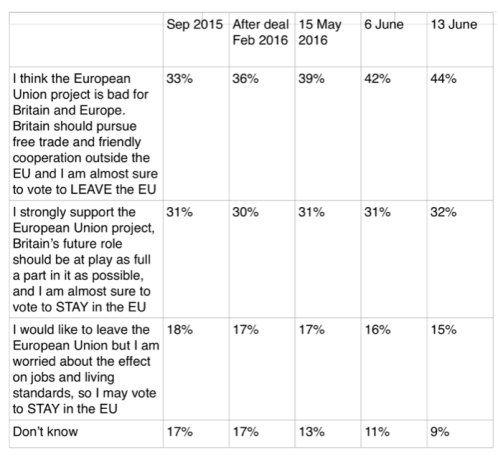
(Dont know... dont have too much dog in fight)